
How We Did Pew Restoration for Christ Lutheran Church?
Some furniture just holds a room together. In a sanctuary, the pews aren’t just seating, they’re where generations of a congregation have sat for baptisms, weddings, funerals, and every ordinary Sunday in between. When Christ Lutheran Church in Webster Groves, Missouri needed its original oak pews restored rather than replaced, they brought the project to us. Here’s how we approached the pew restoration, what it involved, and what any church considering a similar project should know before getting started.
A case study in restoring 40 historic oak pews for a 125-year-old Webster Groves, Missouri congregation without asking the church to pause a single Sunday service.
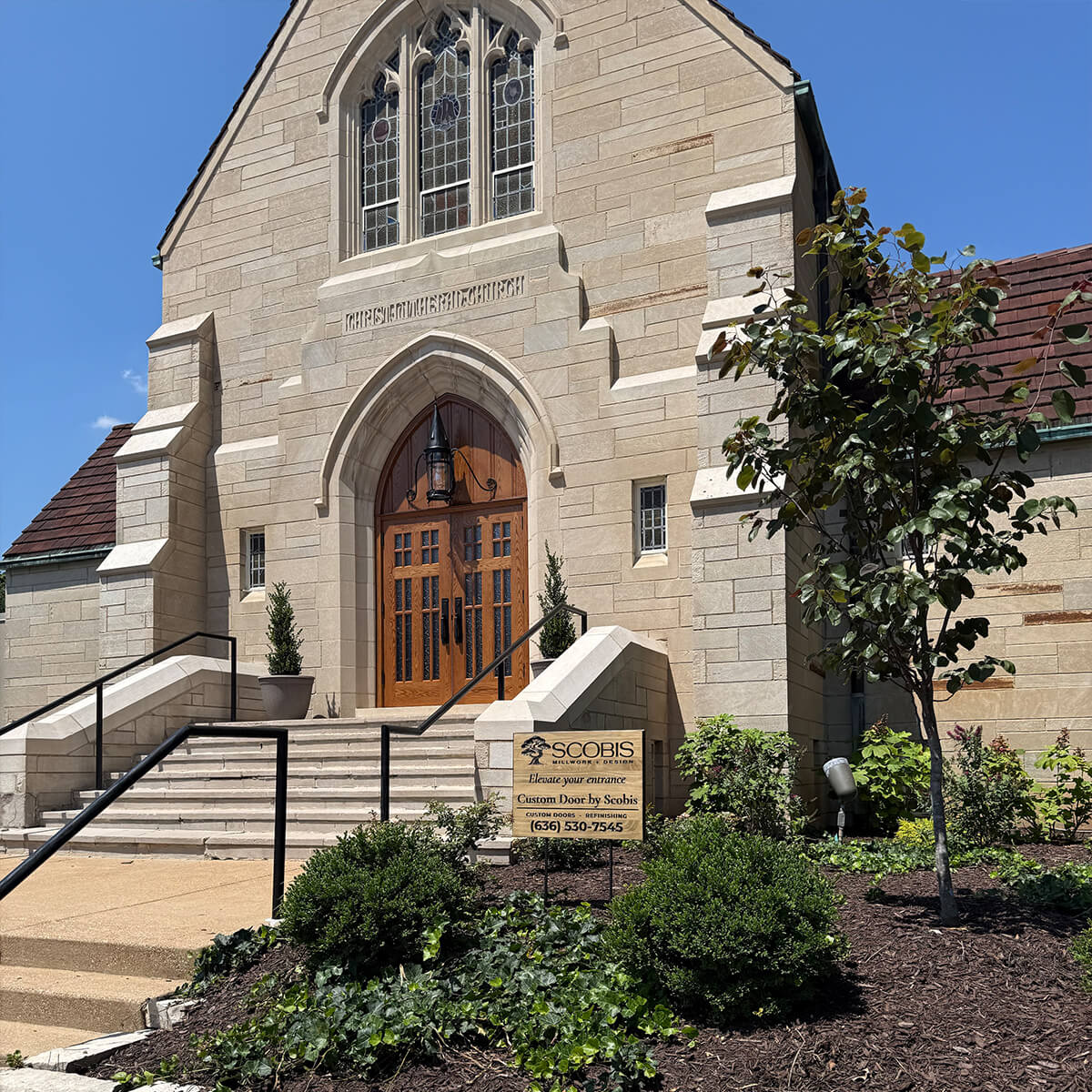
A Church Rooted in Community Since 1897
Christ Lutheran Church traces its roots back to 1897, when Albert H. Buser and a small group of Lutheran families in Webster Groves began holding services in a borrowed meeting room.
The congregation grew steadily over the following decades moving through a series of buildings before settling into the sanctuary it occupies today, which opened in 1942.
In 1988 Christ Lutheran merged with Living Word Lutheran Church and joined the Evangelical Lutheran Church in America (ELCA), and in 1996 members of Luther Memorial Lutheran Church joined the congregation as well.
Today, Christ Lutheran continues to describe itself around three words: Welcome, Grow, Serve. The oak pews at the center of this project have been part of that story since the current sanctuary opened, nearly 85 years of weekly use, generations of families, and the wear that comes with it.
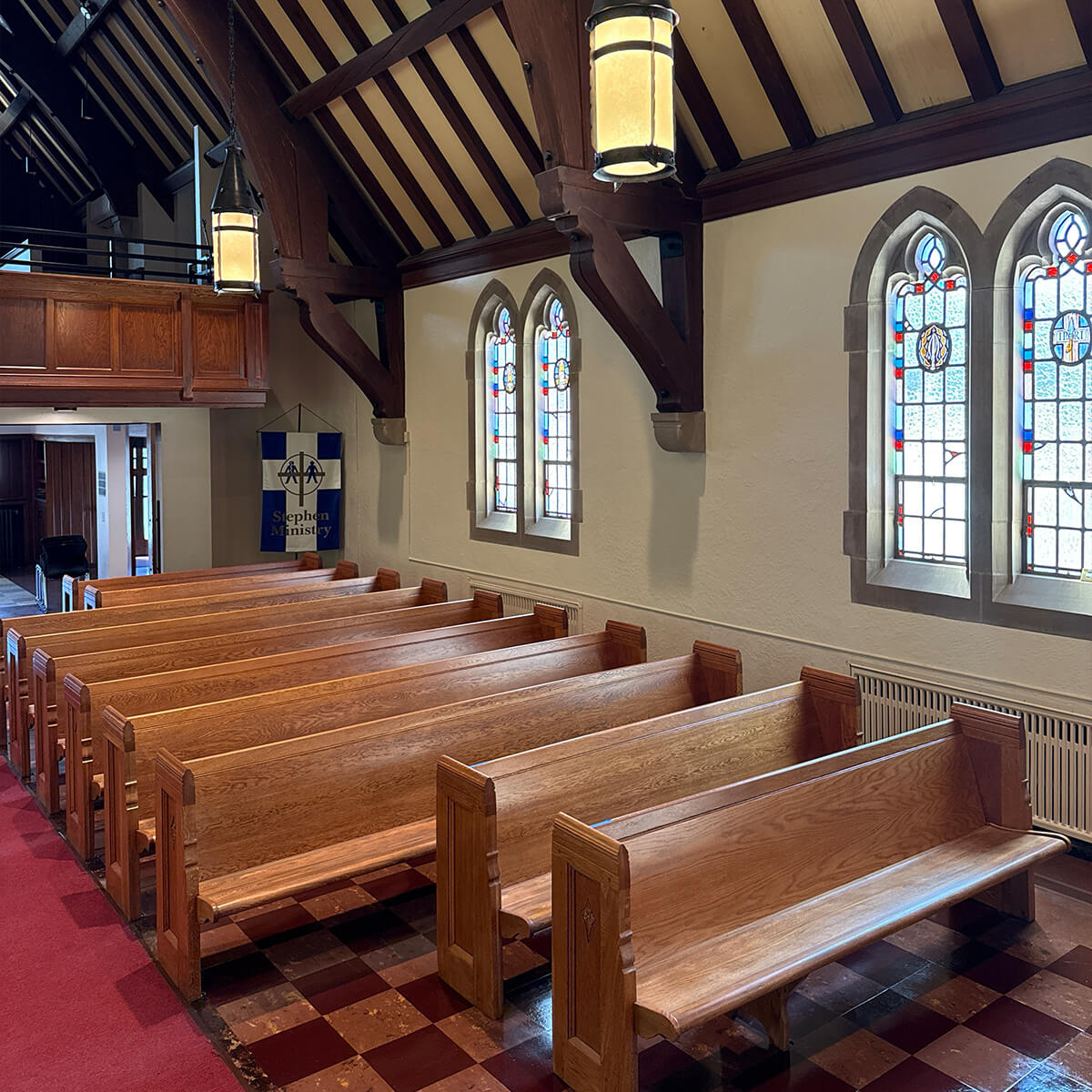
What Christ Lutheran Needed Restored
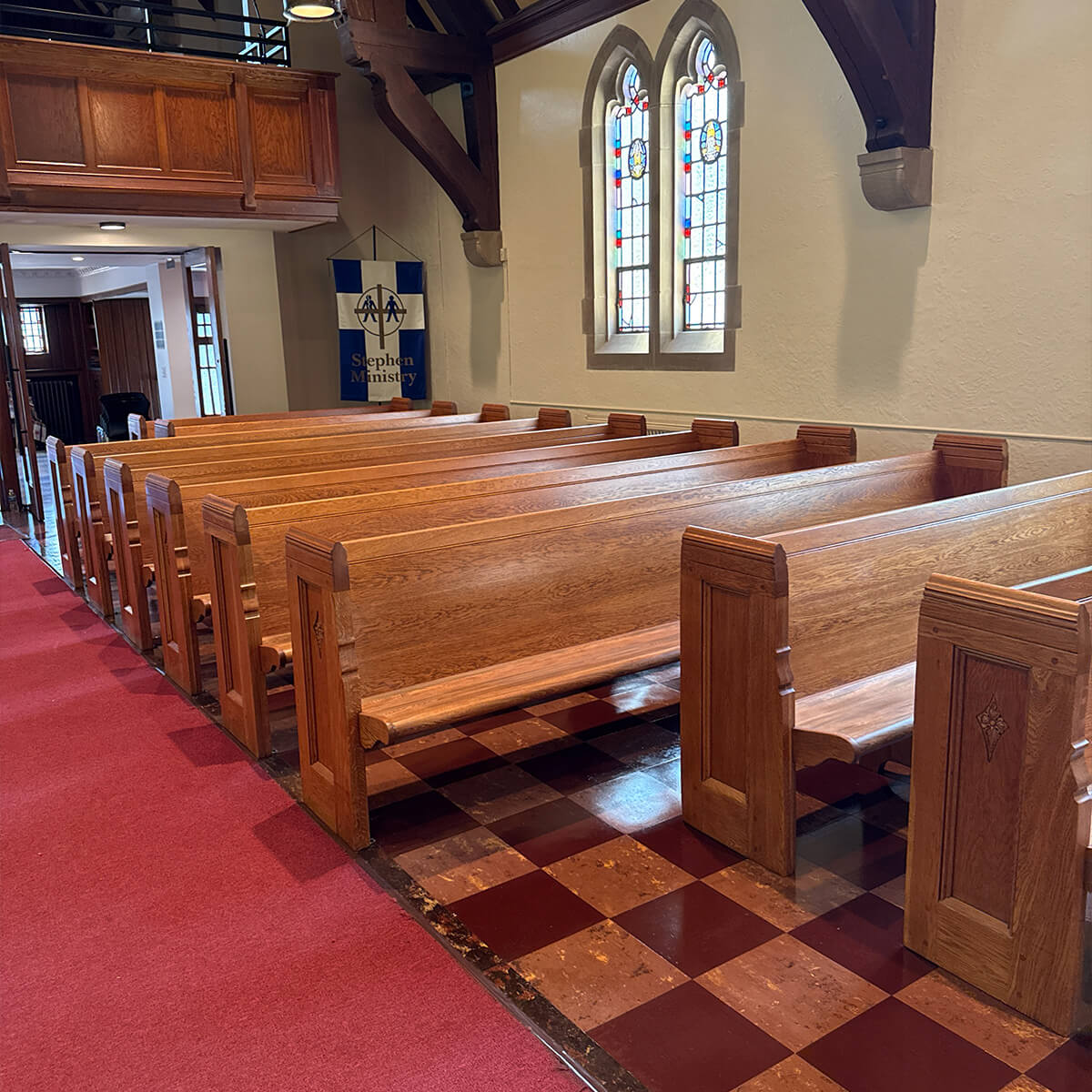
The project was to restore approximately 40 original oak pews for Christ Lutheran’s sanctuary at 1 Selma Ave in Webster Groves, MO. Rather than replace the pews with new millwork, the church chose restoration, preserving the original wood, joinery, and character while addressing decades of wear, loose joints, and a finish that no longer matched the woodwork it was installed against.
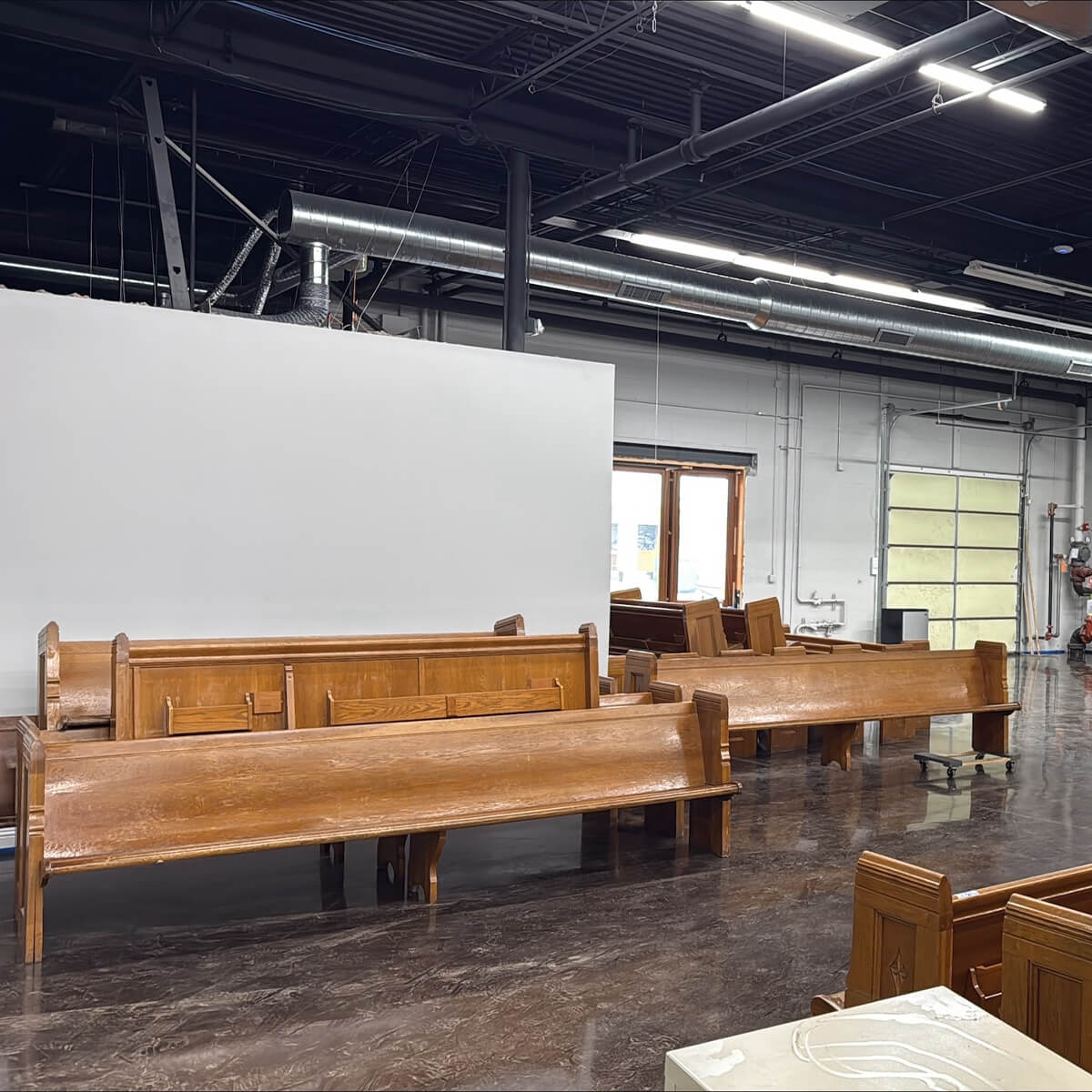
Because a sanctuary can’t simply close for a few weeks, the pews were pulled and restored in batches rather than all at once. Our shop crew removed pews in groups, restored them, and returned finished sets for reinstallation while the rest of the sanctuary stayed in use.
The first phase alone brought 10 completed pews back into the church, with the remaining sets following in sequence. At full capacity, restored pews from this single project filled a meaningful footprint of our St. Louis workshop, a reminder of just how much material and craftsmanship go into a project most churchgoers will only ever see as «the pews.»
Contact Our Team!
Whether your door needs a professional refinish or a full custom replacement, we’d love to take a look. Don’t hesitate in contacting us and one of our experts will be in touch shortly.
What Makes Church Pew Restoration Different
Restoring church pews isn’t the same as refinishing a piece of residential furniture, and it isn’t the same as building new millwork from scratch. A few things set it apart:
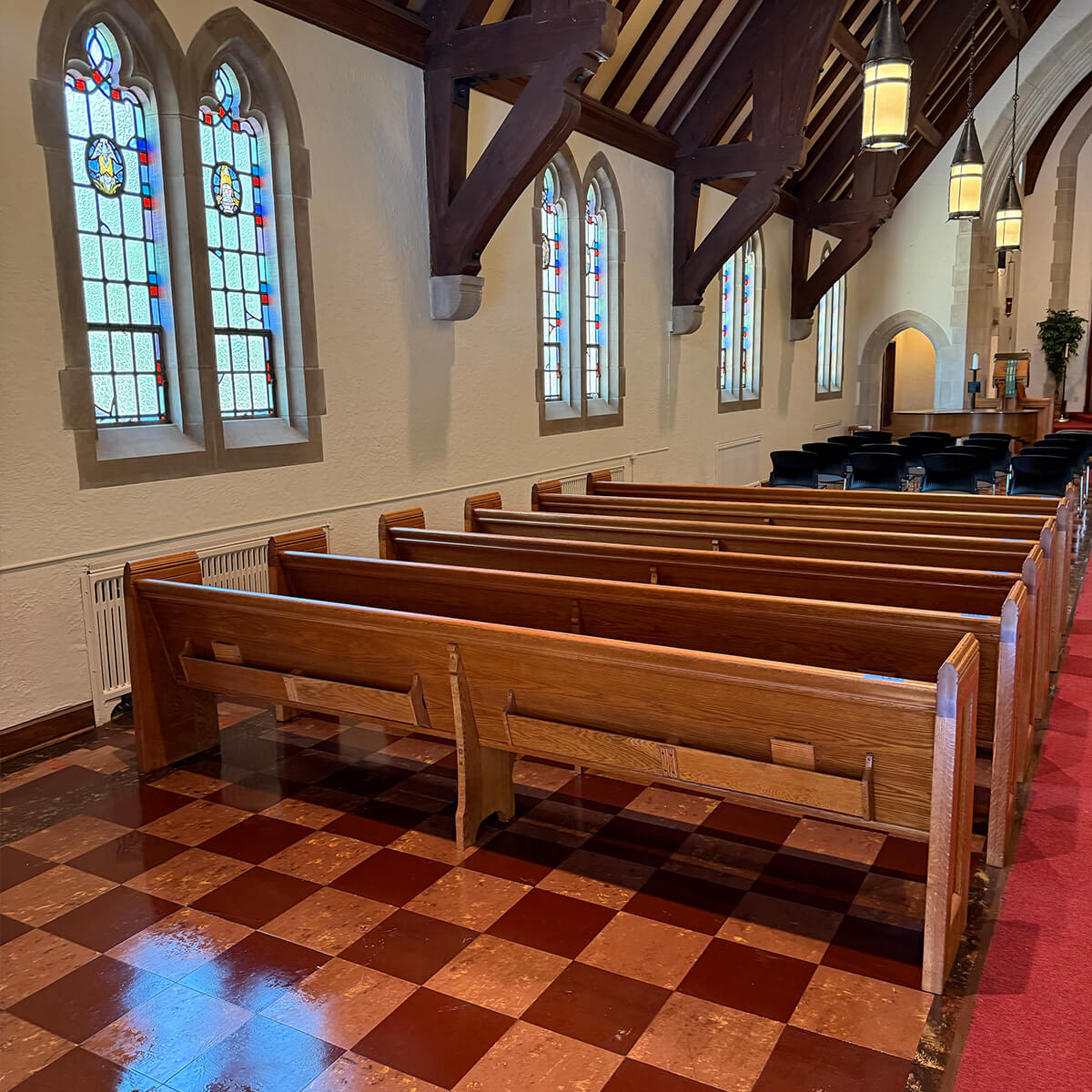
- Matching the finishing: Original stain color, sheen, and grain character have to be matched closely enough that repaired sections are indistinguishable from the surrounding wood, especially under the mix of natural and stained-glass-filtered light common in a century-old sanctuary.
- Structural integrity after decades of use: Pews absorb a lot over the decades. Loosened joints, worn mounting hardware, and stress at the floor connections all need to be evaluated and repaired, not just cosmetically covered.
- Zero tolerance for downtime: A church can’t shut down for a renovation the way a commercial space might. Work has to be sequenced so the congregation always has a place to sit.
- Preserving history: The goal isn’t to make 85-year-old pews look brand new and generic. It’s to respect the original craftsmanship while making the pews structurally sound and presentable for another century of use.
How We Restored the Church Pews
Every restoration project at Scobis follows the same disciplined process we use on new custom millwork. The difference is that instead of building from raw lumber, we’re working to preserve and repair what’s already there.
1. Assessment and Removal
Our team evaluated the condition of each pew on-site, noting structural issues, hardware condition, and finish wear before carefully removing pews in phased batches for transport to our St. Louis workshop.
2. Stripping and Structural Repair
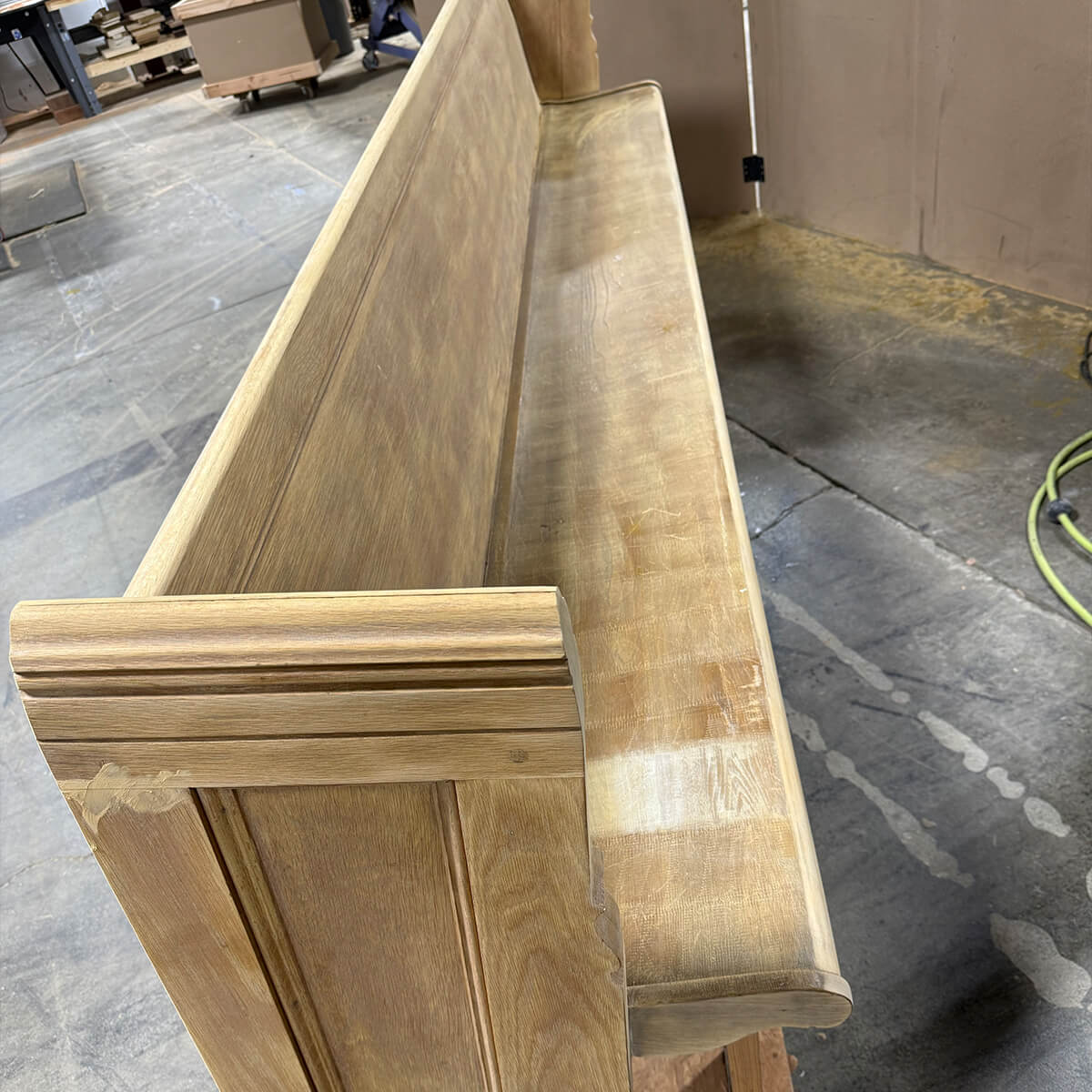
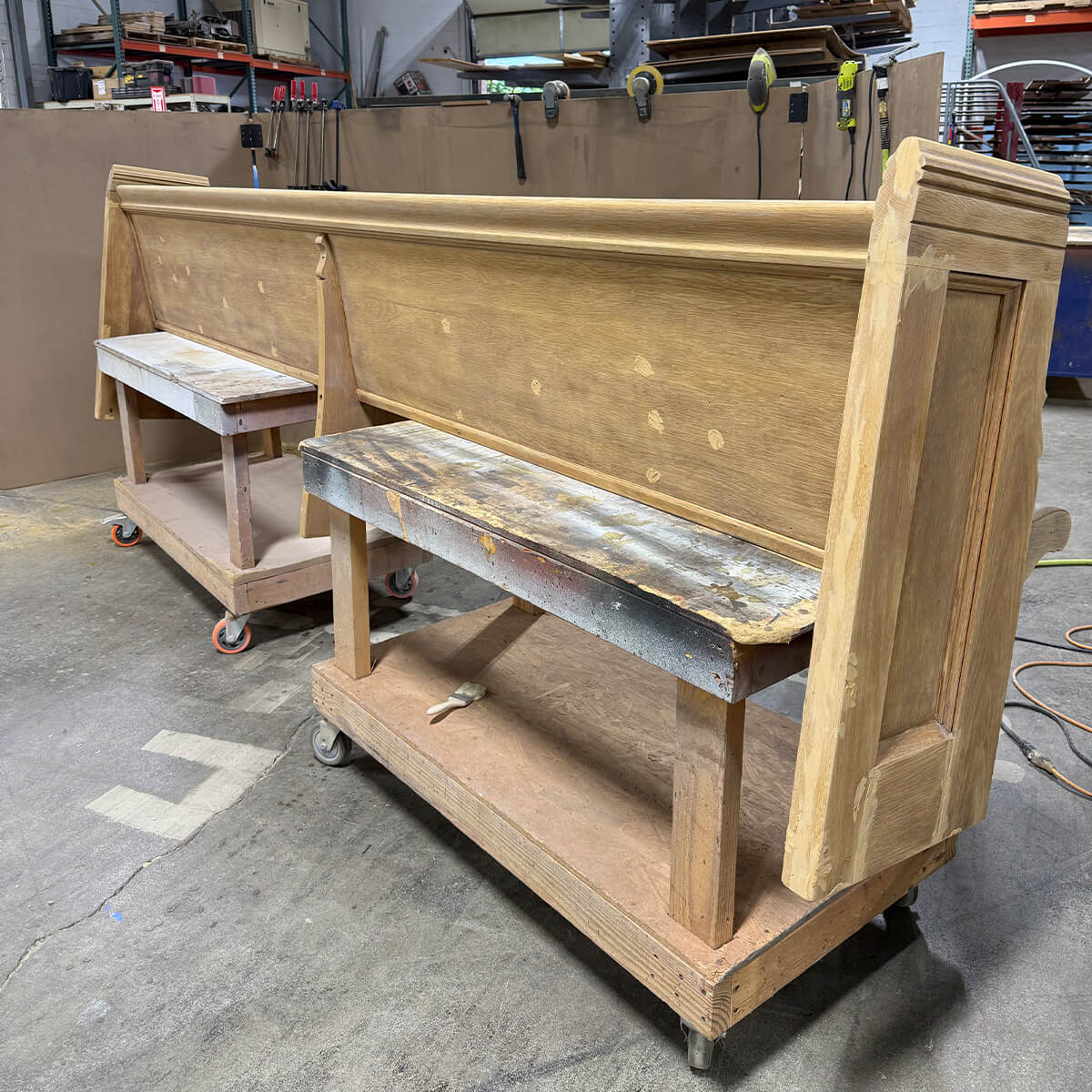
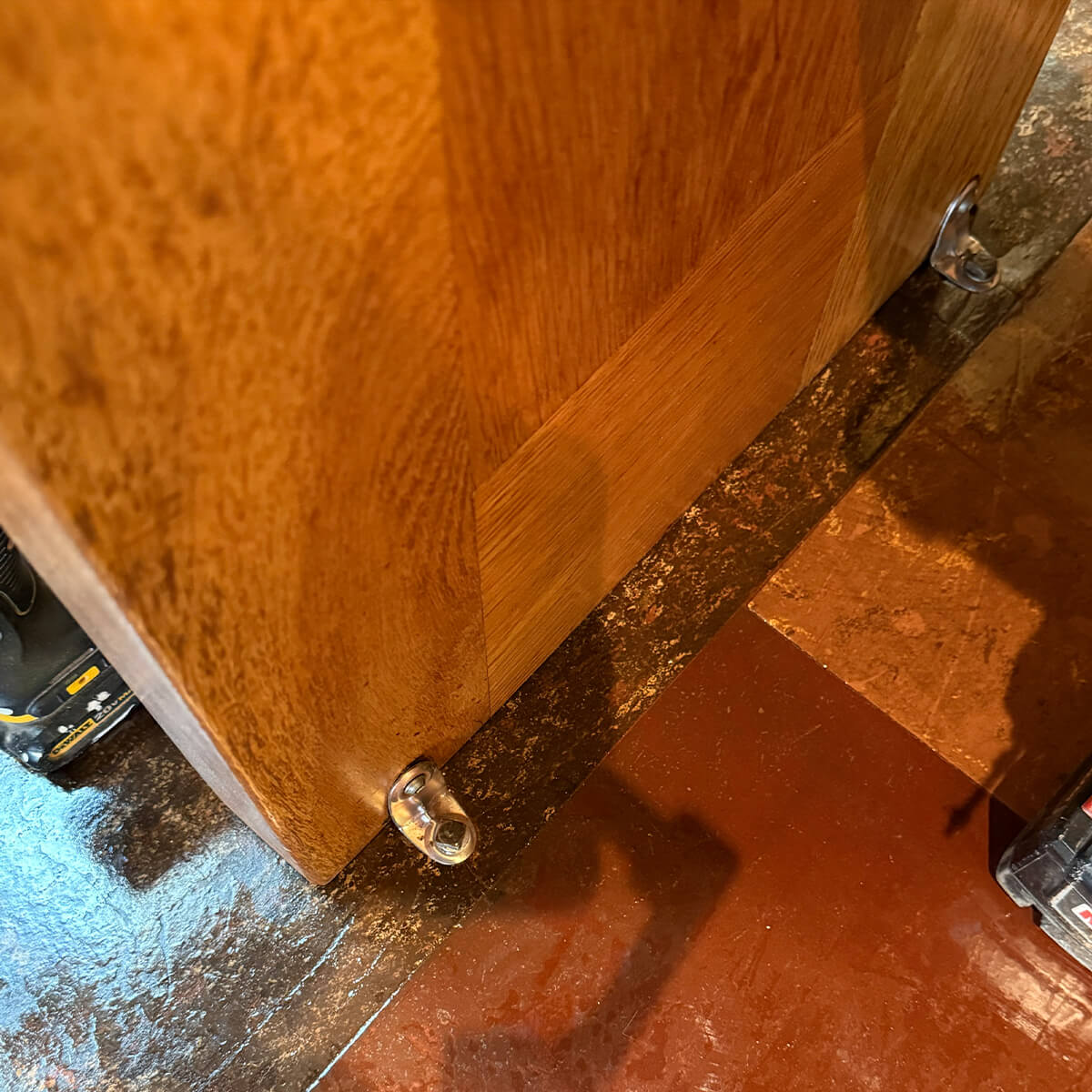
Each pew was stripped down to bare oak, removing decades of old finish and buildup. This stage also exposed structural issues like loose joinery, worn mounting brackets, and stress points, that were repaired before any refinishing began, ensuring the pews are as sound structurally as they are visually.
3. Sanding and Surface Preparation
Once repairs were complete, each pew was sanded to a smooth, even surface across every panel, rail, and end cap, the necessary foundation for a finish that reads as original rather than patched.
Contact Our Team!
Whether your door needs a professional refinish or a full custom replacement, we’d love to take a look. Don’t hesitate in contacting us and one of our experts will be in touch shortly.
4. Refinishing to Match the Original
Stain and finish were matched to the sanctuary's existing woodwork, restoring the pews' original warmth and grain character rather than introducing a new look. The result is oak that reads as it did decades ago. Richer and more even, but unmistakably the same pews the congregation has always known.
5. Reinstallation and Hardware
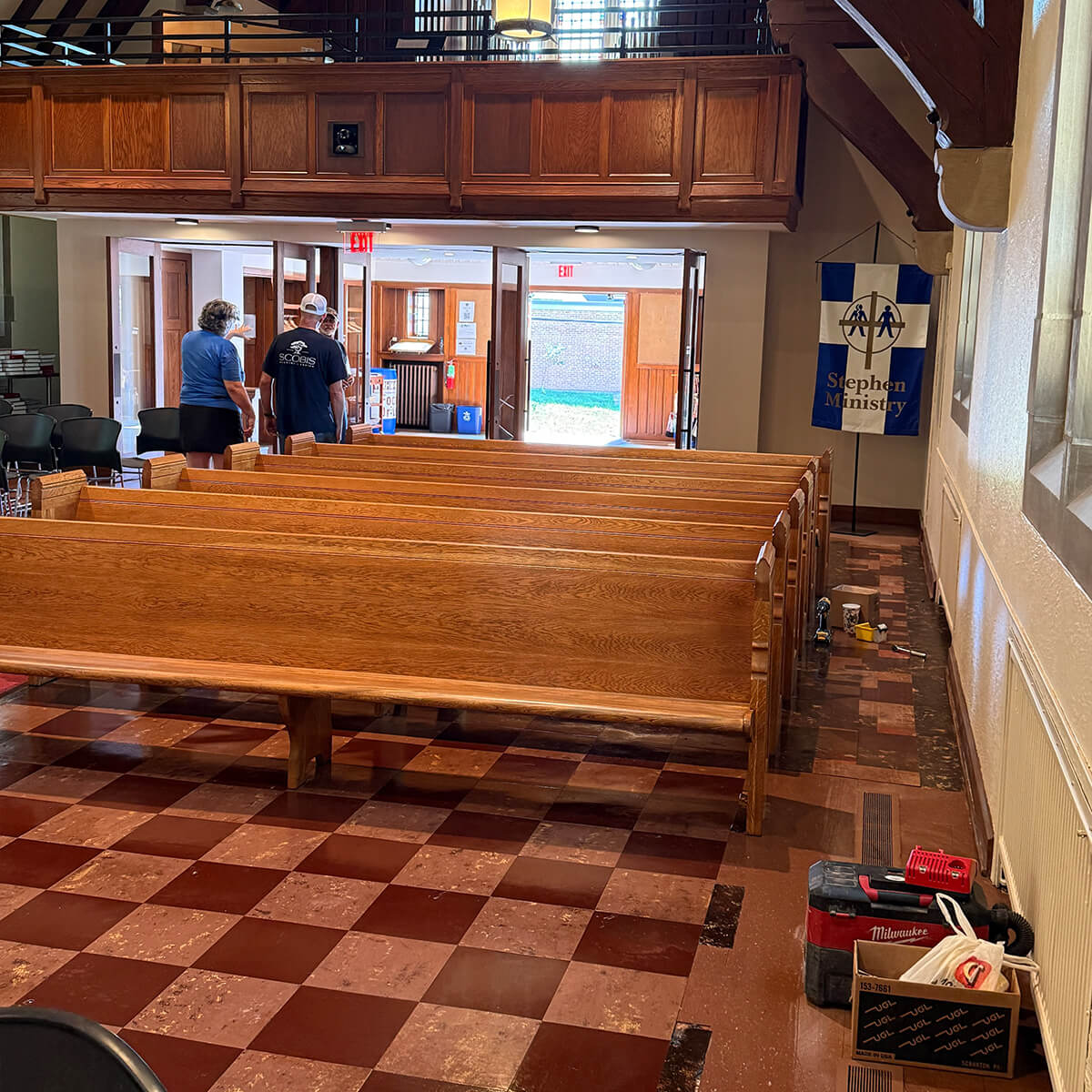
Finished pews were returned to the sanctuary and reinstalled in sequence, including reattaching floor-mounting hardware to ensure each pew is secure and level for daily use.
6. Delivery in Phases
Rather than pulling every pew at once, restored sets were delivered and reinstalled in batches so the sanctuary remained usable throughout the project. A coordination approach we use on every occupied-building restoration, whether it's a church, school, or historic commercial space.
Pew Restoration and Custom Millwork for Churches
Christ Lutheran’s pew restoration is one project in a much larger part of what we do: helping churches, chapels, and historic institutions across the country preserve and restore the woodwork that defines their sanctuaries.
That work goes well beyond pews from custom architectural entry doors to interior millwork, altar and chancel woodwork, and full-building restoration projects. A few reasons churches bring that work to us:
- One team, start to finish: From assessment through fabrication and installation, a single point of contact manages the entire project. No vendor fragmentation, no coordination gaps between the door builder, the millwork shop, and the installer.
- 25 years of craftsmanship: Scobis has built and restored custom architectural wood doors and millwork since 2001, with craftsmen averaging over a century of combined hands-on experience.
- Built for occupied buildings: Churches, schools, and historic commercial buildings can’t shut down for a renovation. We plan and sequence restoration work, like the phased pew delivery at Christ Lutheran, around your schedule, not the other way around.
- Precision paired with craft: We combine traditional joinery and hand-finishing with 3D renderings, CAD, and CNC precision, giving churches and their architects clarity on the final result before fabrication ever begins.
- A specialty in worship spaces: Beyond pews, our church and institutional work includes custom entry and chancel doors, altar millwork, and integrated hardware systems. Built to the same standard whether the project is new construction or historic restoration.
FAQs About Church Pew Restoration
Is it better to restore or replace church pews?
It depends on the condition of the existing pews and the church’s goals. If the wood and joinery are structurally sound, restoration typically preserves the character and craftsmanship of the original pews at a lower cost than full replacement, while still resolving structural and cosmetic issues. Pews with extensive rot, water damage, or failed structural members may be better candidates for replacement or partial rebuilding.
How long does a church pew restoration project take?
Timelines vary based on the number of pews, their condition, and whether the church needs work phased around ongoing services. Because most sanctuaries can’t close for construction, restoration is usually completed in batches over several weeks so the space stays usable throughout.
What's involved in refinishing an old church pew?
A full refinish typically includes stripping the existing finish, repairing structural issues like loose joints or worn mounting hardware, sanding the surface, and applying a new stain and finish matched to the sanctuary’s existing woodwork.
Does Scobis work on churches outside of the St. Louis area?
Yes. While our workshop is based in St. Louis, Missouri, we take on church restoration and custom millwork projects for congregations across the country, including pew restoration, custom entry and chancel doors, and interior architectural woodwork.