
How to Repair Sun-Damaged Wood Doors?
If your front door has turned chalky, faded, or rough to the touch, you’re not imagining it. Sun exposure is one of the most common reasons wood doors break down before their time. Here’s a quick guide on how to repair sun-damaged wood doors, especially in St. Louis, where summers bring intense UV exposure and front doors take a beating year-round.
Most sun damage is fixable. We’ll walk you through why it happens, how to prevent it, when a DIY fix will work, when you need a professional refinishing job, and what products actually help protect your investment once it’s restored.
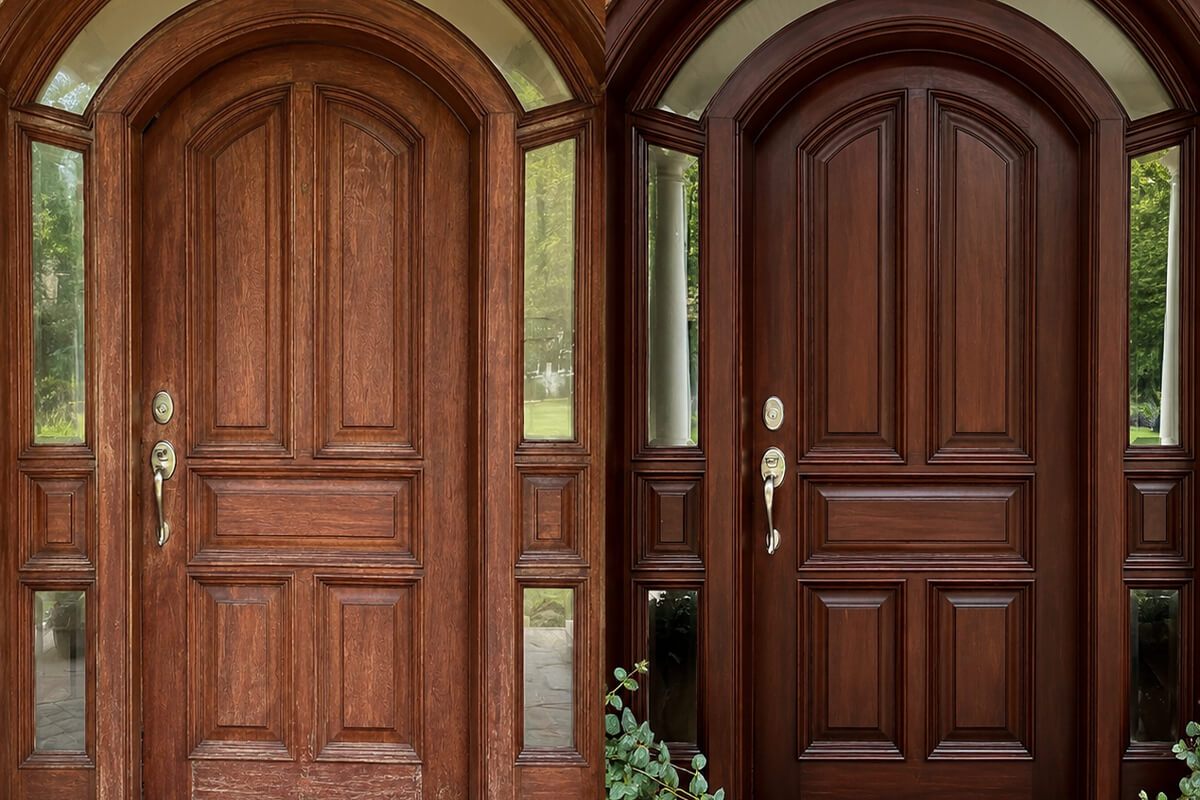
Why Sun Damage Happens to Wood Doors
Wood doors don’t fail because of the wood itself, they fail because of the finish protecting it. Ordinary varnishes and polyurethanes offer very little UV resistance. Over months and years of direct sunlight, especially on south- or west-facing entries, that finish begins to break down at a molecular level.
The telltale signs are:
- Chalky, blue-gray oxidation on the surface, especially on southern or western exposures
- Rough texture where the topcoat has degraded
- Fading or graying wood tone underneath the finish
- Cracking or peeling in more advanced cases
A simple test
Wipe the door with a bit of mineral spirits. If the color and shine temporarily return while wet, the wood underneath is likely still in good shape. The finish is what failed, not the door itself. That’s good news, because it usually means refinishing (not replacing) is the right call.
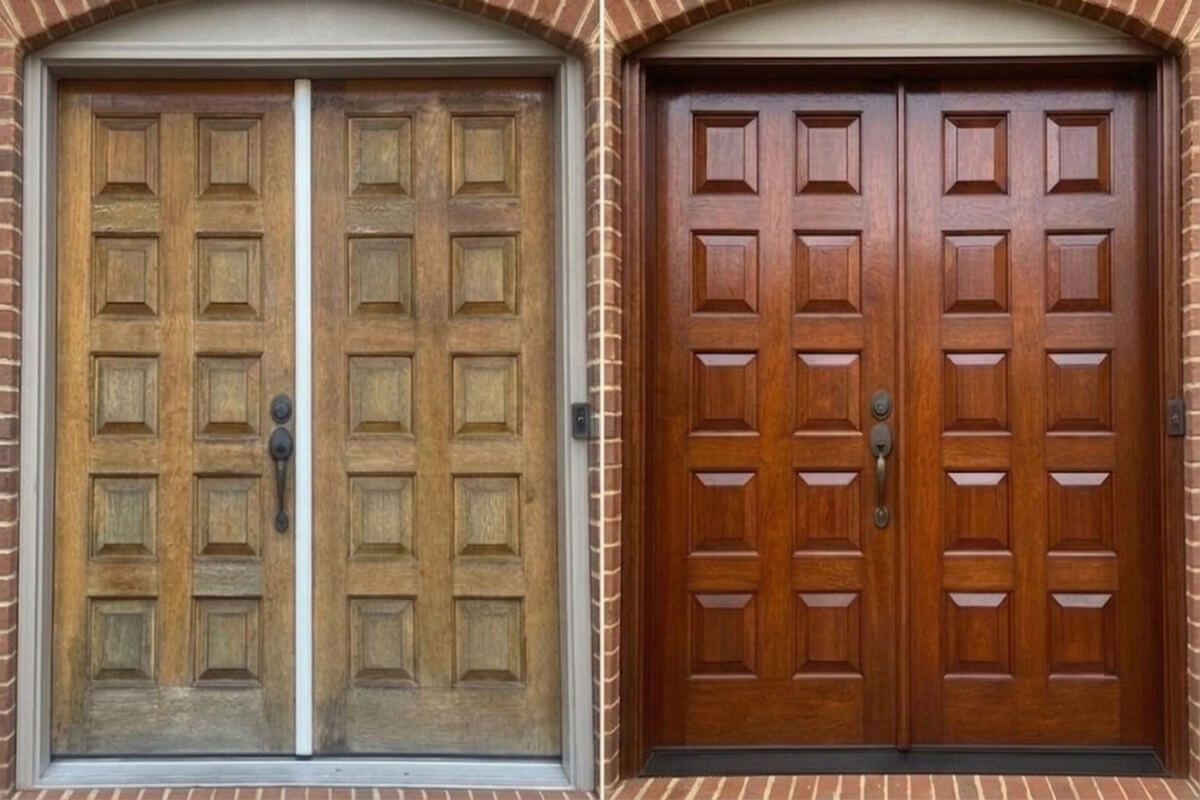
How to Avoid Sun Damage in the First Place
Prevention is far cheaper than repair. A few habits go a long way for your home:
- Use a marine-grade or UV-inhibiting topcoat. Standard interior varnish isn’t built for direct sun. Look for products specifically labeled for UV protection. This is the single biggest factor in how long a finish lasts.
- Reapply topcoats every 2–4 years on doors with direct sun exposure, even if they still look fine. UV damage happens before you can see it.
- Add overhang protection where possible. A porch roof, awning, or storm door can dramatically cut down UV and moisture exposure.
- Choose the right stain color. Darker stains absorb more heat but often hide early fading better; lighter finishes show wear sooner but stay cooler.
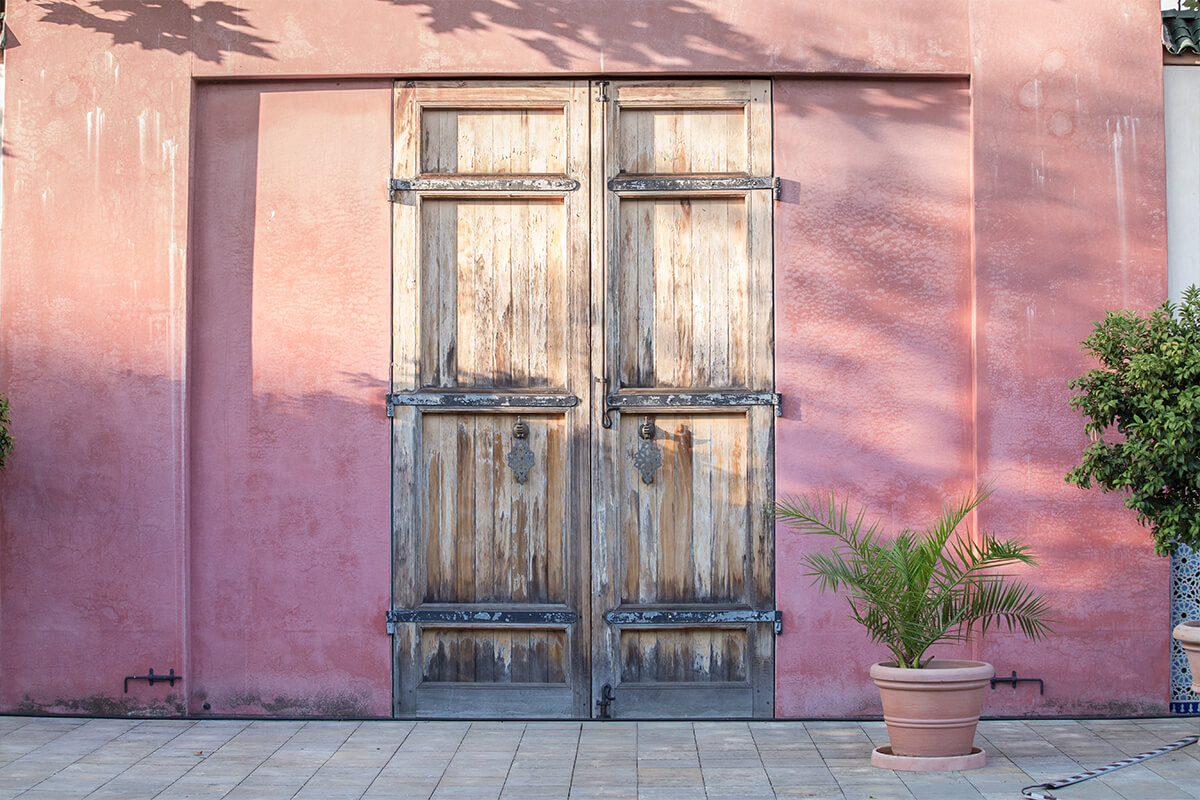
Products for Protecting or Repairing Sun-Damaged Doors
For lighter damage where a full strip-and-refinish isn’t necessary yet, here’s how common options stack up:
| Product Type | Best For | Pros | Limitations |
|---|---|---|---|
| Restoring Oil | Light chalking/fading, no bare wood exposed | Fast (under an hour), no sanding required | Doesn't fix deep damage or cracking |
| Oil-Based Varnish | General topcoat maintenance | Widely available, easy to apply | Poor UV resistance, fades again within a year or two on sun-exposed doors |
| Marine-Grade UV Varnish | Full refinishing projects, direct-sun entries | Strong UV resistance, long-lasting protection | Longer cure time, harder to source locally |
| Water-Based Topcoat | Refinishing where color-shift is a concern | True color retention, faster dry time | Slightly less durable than oil-based marine finishes |
| Professional Refinishing | Historic, custom, or heavily damaged doors | Commercial-grade materials, expert color match, structural assessment included | Higher upfront cost than DIY |
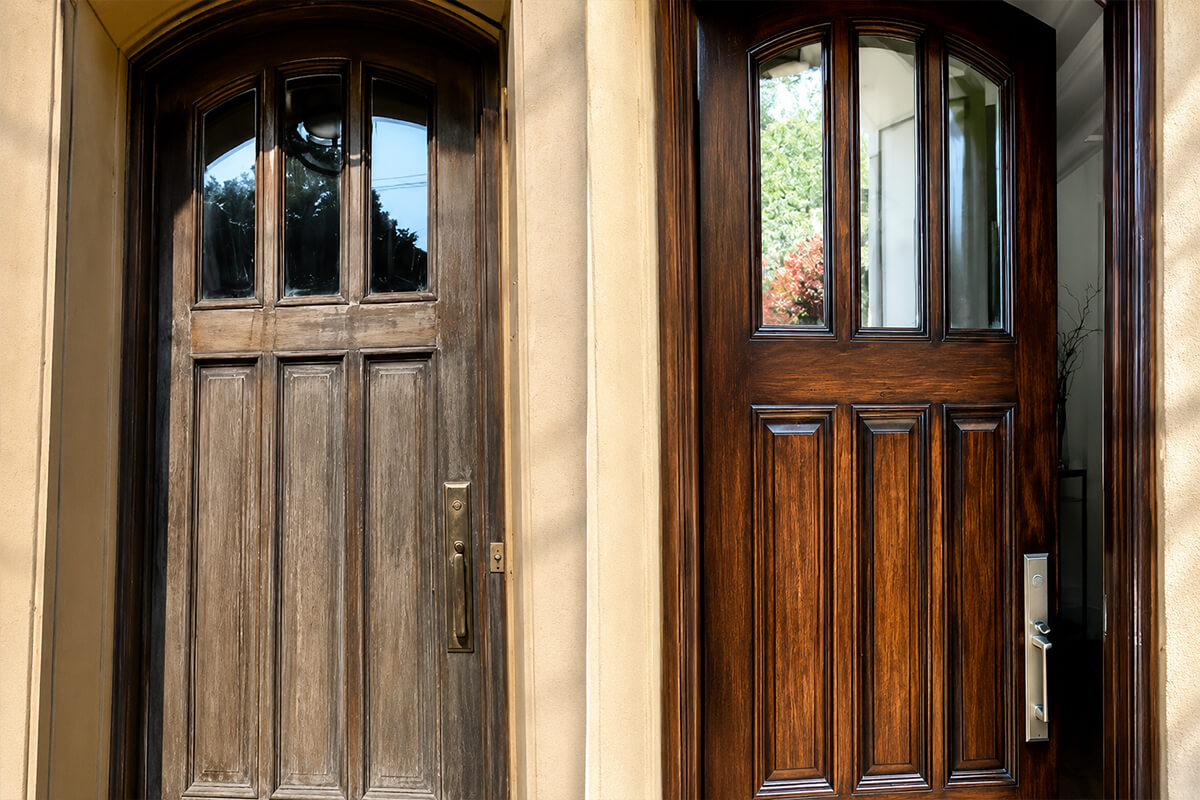
What Works for Moderate Sun Damage (DIY)
If the damage is limited to the finish like chalking, minor fading, light surface roughness, this is a very doable weekend project.
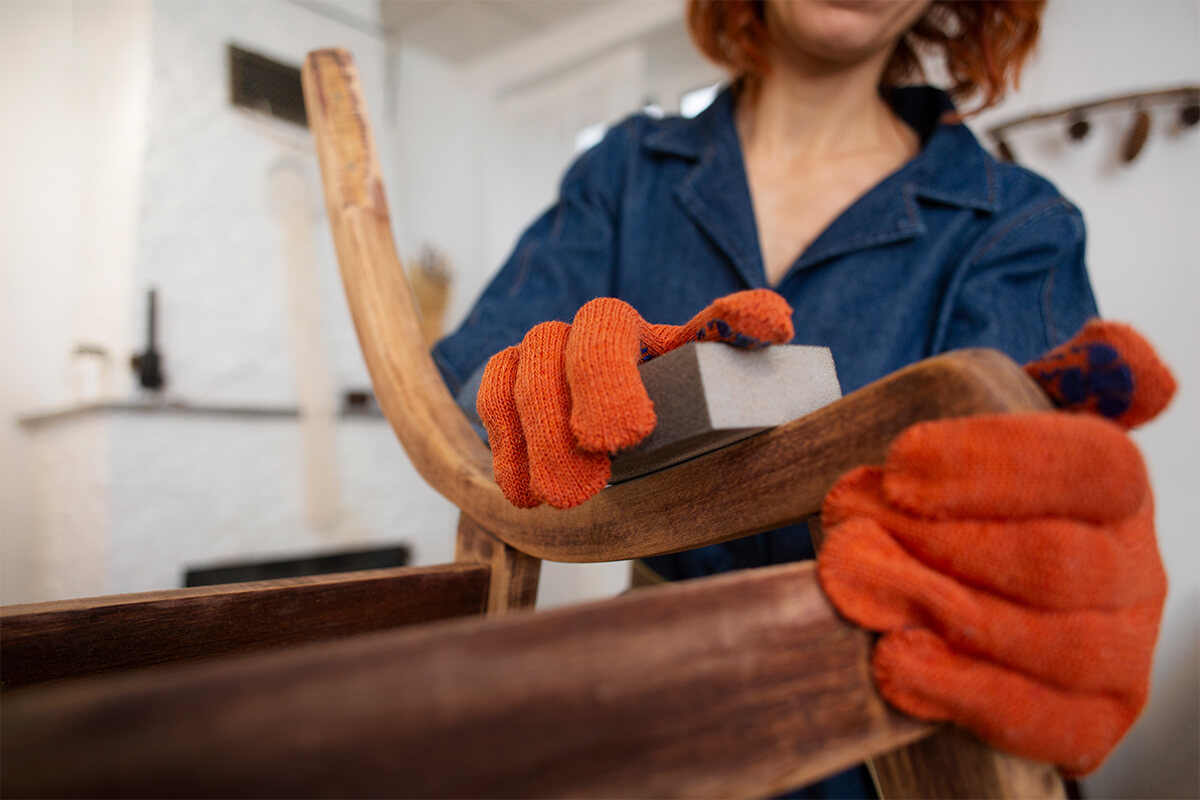
What you’ll need is an orbital sander, sandpaper in 80/100/150/220 grit, sanding sponges for detail areas, tack cloth, matching oil-based stain, and a UV-protective marine varnish.
The basic process:
- Remove door hardware (leave the deadbolt mechanism in place if you can, so you can still lock up overnight).
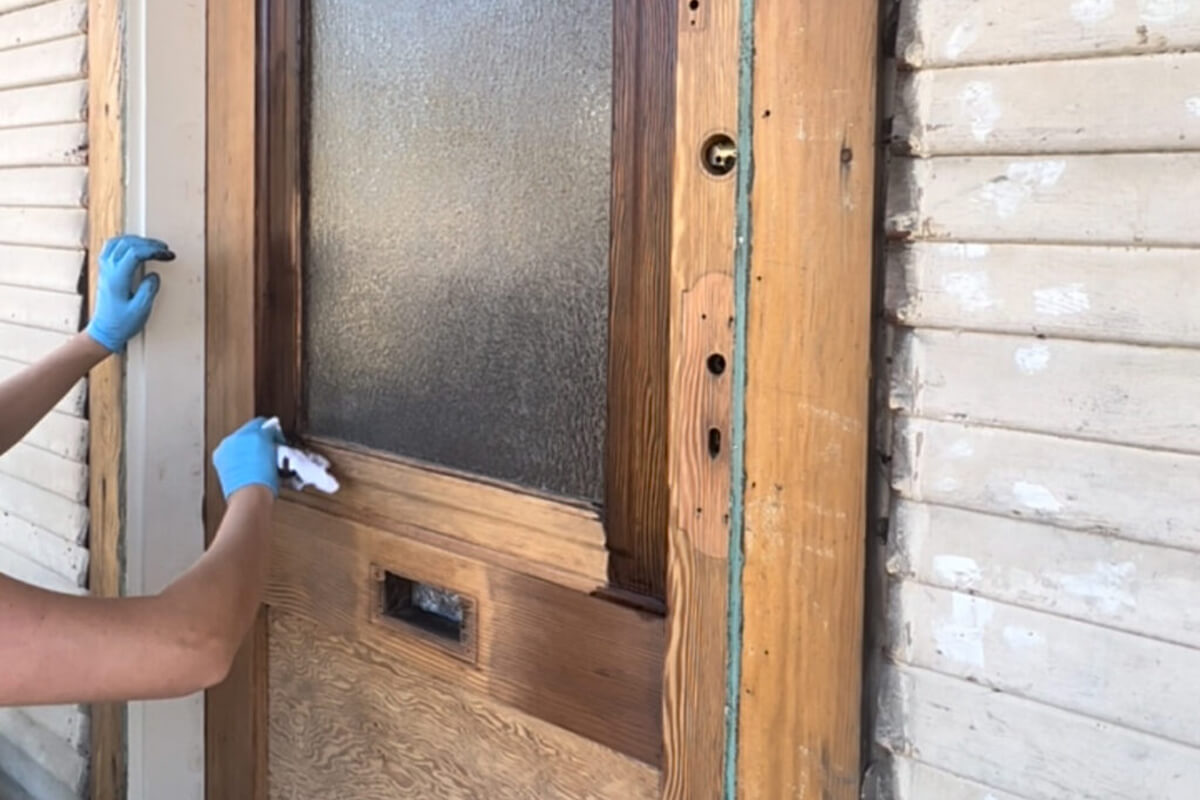
- Sand the damaged finish down to bare wood, working from 80 grit up to 220 grit.
- Wipe the door clean of dust with a tack cloth.
- Restore color with an oil-based stain that matches the original tone — test on a hidden section first.
- Apply 2–3 thin coats of a UV-protective marine varnish, allowing full dry time between coats per the label.
- Reinstall hardware once the final coat has cured.
A few tips that make a real difference:
- You don’t have to remove the door from its hinges, but doing so, makes sanding easier and gives a more even finish.
- Only apply one coat per day if you’re leaving the door in place; a finish that isn’t fully cured when the door closes at night can mar against the frame.
- Plan the project around a stretch of warm, dry weather. Humidity and temperature both affect cure time significantly.
- For doors with only light chalking and no wood damage, a penetrating color-restoring oil can refresh the surface in under an hour, without a full strip-and-refinish.
Contact Our Team!
Whether your door needs a professional refinish or a full custom replacement, we’d love to take a look. Don’t hesitate in contacting us and one of our experts will be in touch shortly.
Signs You Need to Replace Your Door
Not every sun-damaged door can be saved with a sand-and-refinish. Watch for these signs that point toward replacement instead:
- Deep cracks or splits that go beyond the surface, especially near joints or panels
- Soft, spongy wood is a sign of rot, usually from moisture that got in after the finish failed
- Warping or swelling severe enough that the door no longer closes or seals properly
- Structural movement in panels or stiles that sanding and filler can’t correct
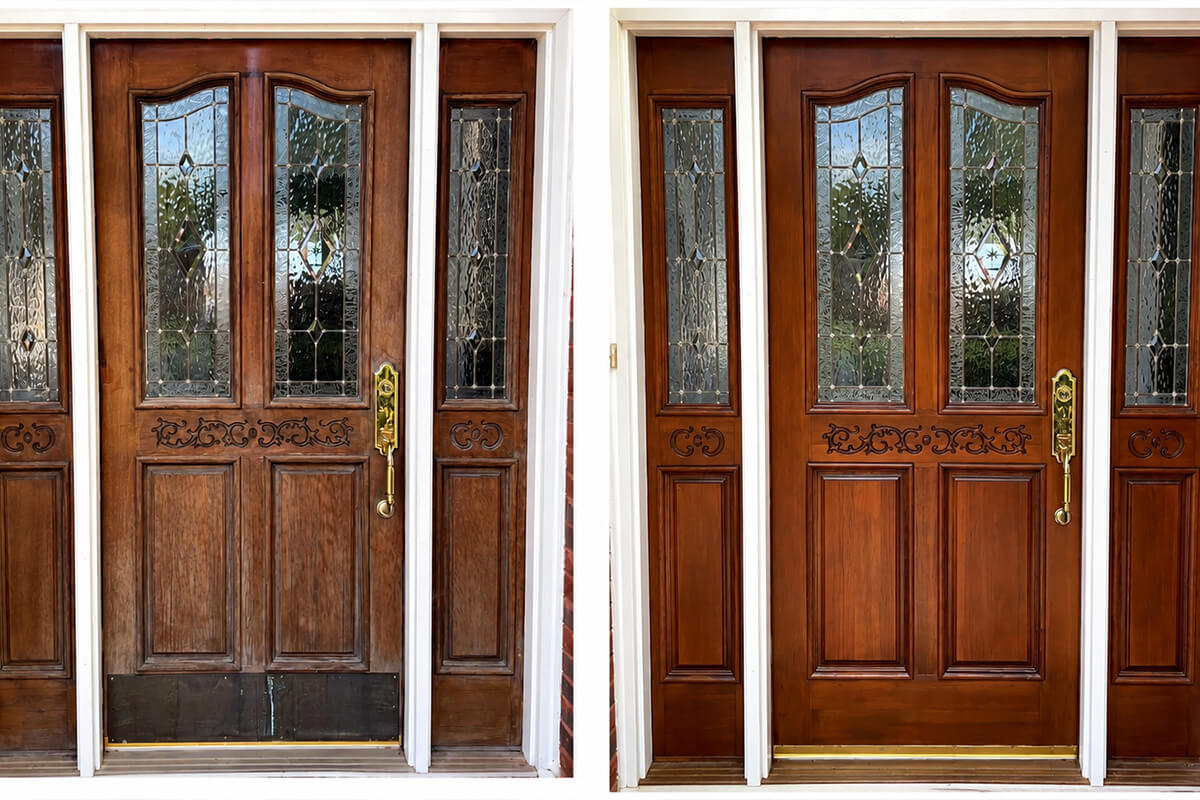
If you’re only dealing with cosmetic UV damage such as chalking, fading, minor surface roughness, refinishing is almost always the better investment. It’s a fraction of the cost of replacement and, done correctly, can extend a door’s life by many more years.
Why It's Worth Calling in a Custom Millwork Expert
DIY refinishing works well for moderate damage, but there are real limits to what sanding and a store-bought stain can achieve, particularly on older, architecturally detailed, or historic doors common throughout St. Louis neighborhoods like Ladue, Kirkwood, and Chesterfield.
A professional refinishing team brings:
- Color-matching expertise for doors with custom or discontinued stain profiles
- Proper handling of raised panels, moulding, and carved detail that’s easy to damage with a power sander
- Commercial-grade UV topcoats not typically available at a hardware store
- The ability to assess structural issues before they become bigger (and more expensive) problems
- A finish that’s built to last, not just to look good on day one
For doors with sentimental or architectural value like an original entry on a century-old home, a custom-built church door, or fine millwork, a professional refinish protects the investment far better than a DIY attempt.
Wood Door Refinishing in St. Louis
Sun damage is one of the most common and most preventable issues facing wood doors in St. Louis. Catching it early with a UV-protective topcoat can save you from a full refinish down the line, and even significant chalking or fading is usually fixable without replacing the door entirely.
If your front door needs more than a weekend fix or you want a finish that’s actually built to handle St. Louis sun, our team specializes in custom wood door refinishing and restoration across the St. Louis area, including Ladue, Kirkwood, and Chesterfield. Reach out to find out whether your door needs a refinish or a replacement.