
How Do You Mix Dark and Light Wood in a Room in 2026?
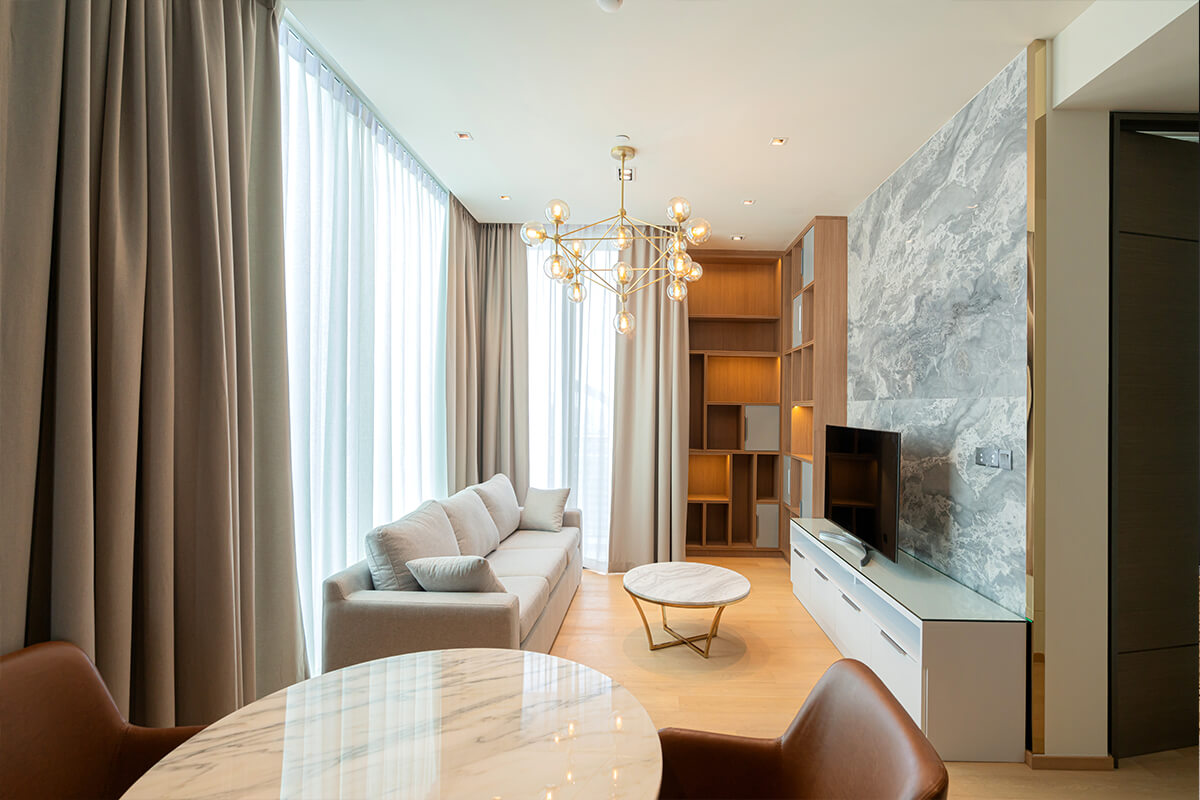
You can mix dark and light wood in the same room, and in 2026 it’s one of the most popular ways to design a space. The key is choosing a dominant tone, matching undertones, and repeating each wood finish at least twice so the room feels intentional instead of random.
Whether you’re updating a living room, refinishing a staircase, or adding a custom wood door, mixing tones the right way turns a flat, matchy space into one with depth and character. Here’s how to do it well and how to avoid the mistakes that make mixed wood look mismatched instead of designed.
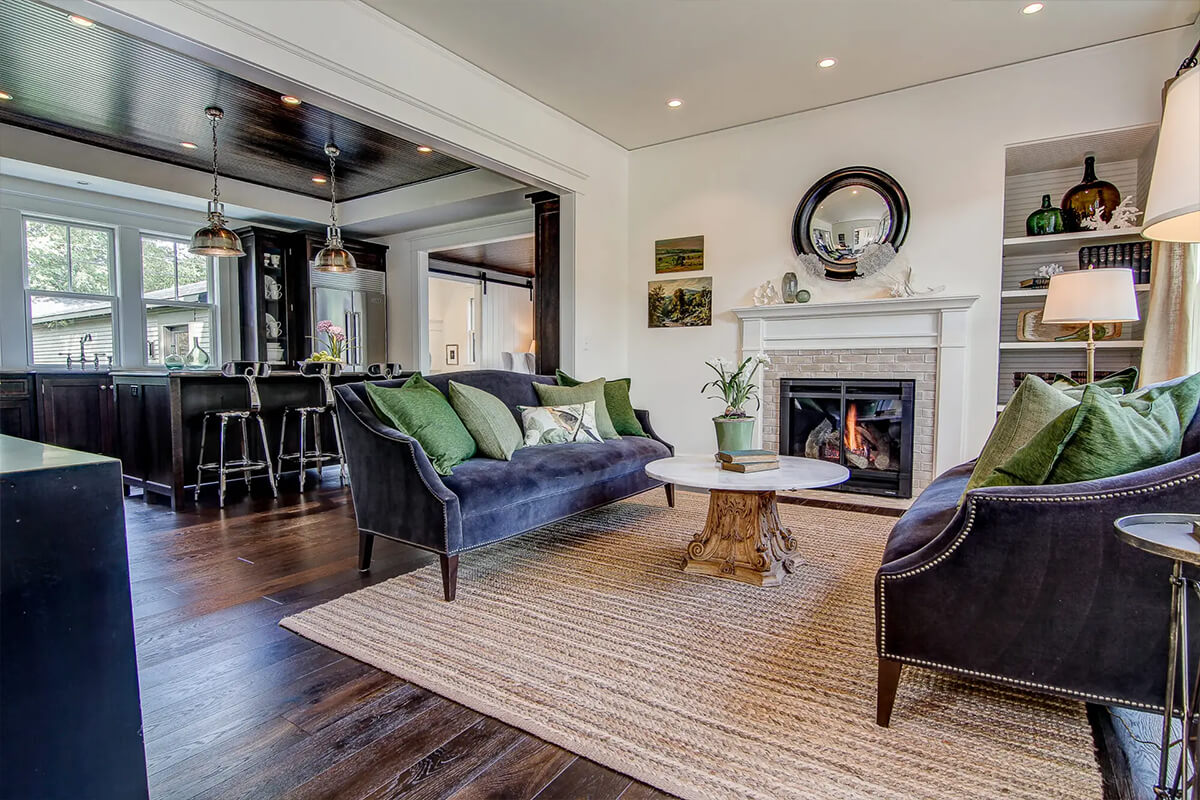
Why Mixing Dark and Light Wood Works?
A room built from a single wood tone can feel flat no matter how nice the wood is. Combining tones does three things a matched palette can’t:
- Adds depth and visual interest: The eye naturally moves toward contrast, so alternating light and dark wood keeps a room from feeling one-dimensional.
- Improves proportion: Darker wood grounds a large, open room; lighter wood opens up a smaller one. Used together, they can balance a space that’s awkward in scale.
- Reflects real homes: Few houses are built entirely in one era or one wood species. A blended palette looks collected over time, not staged in a showroom.
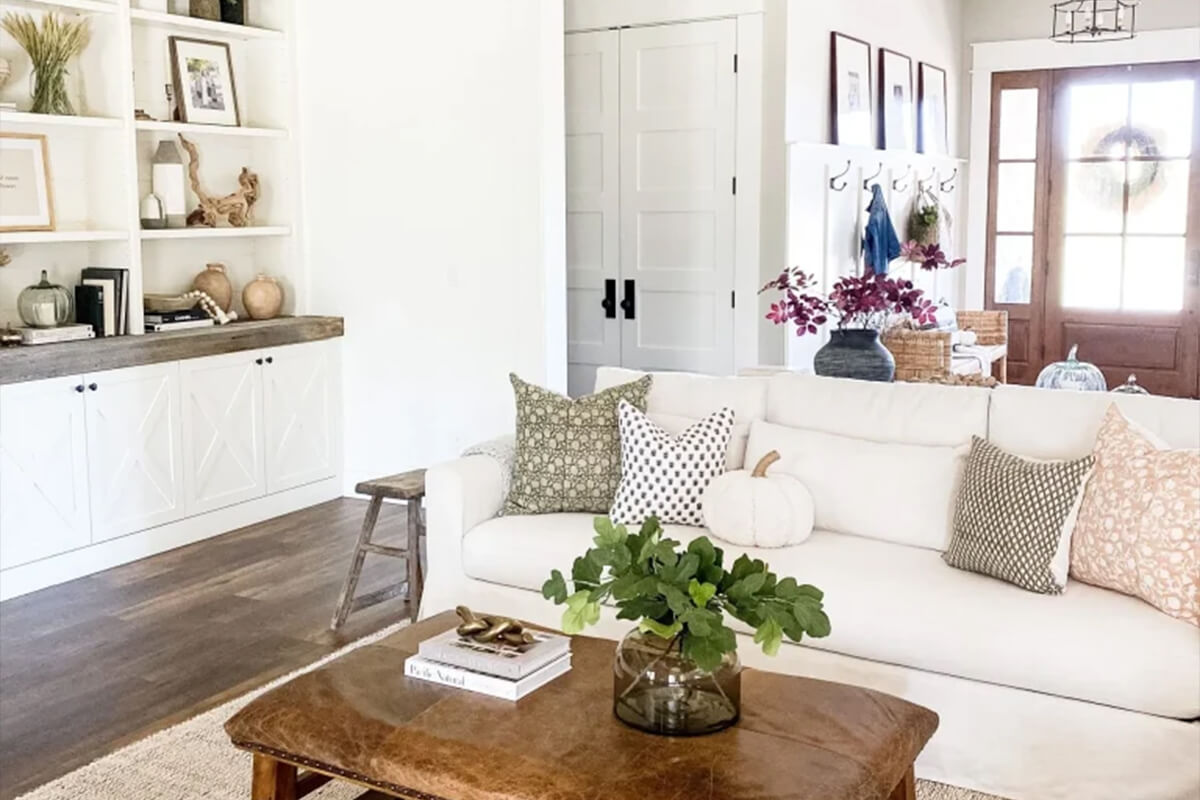
What Wood Undertone Actually Means?
Most «wood clash» problems aren’t a light-versus-dark issue. They’re an undertone issue. Every wood, light or dark, leans into one of four undertone families:
| Undertone | Leans Toward | Common Woods | Pairs Best With |
|---|---|---|---|
| Warm | Yellow / orange | Oak, pine, chestnut, acacia | Other warm woods; avoid pairing with cool gray finishes |
| Red | Red / pink | Cherry, mahogany | Other red or neutral tones |
| Cool | Gray / ash | Whitewashed oak, gray-stained maple | Other cool or neutral tones |
| Neutral | Balanced brown | Walnut, ash, birch | Nearly any tone, the most flexible pairing choice |
A light oak floor with warm, yellow undertones will fight with a cool, gray-stained coffee table even though one is «light» and one is «dark» doesn’t come into it. Matching undertone families or pairing warm with warm and cool with cool, solves most mixed-wood problems before you even think about shade.
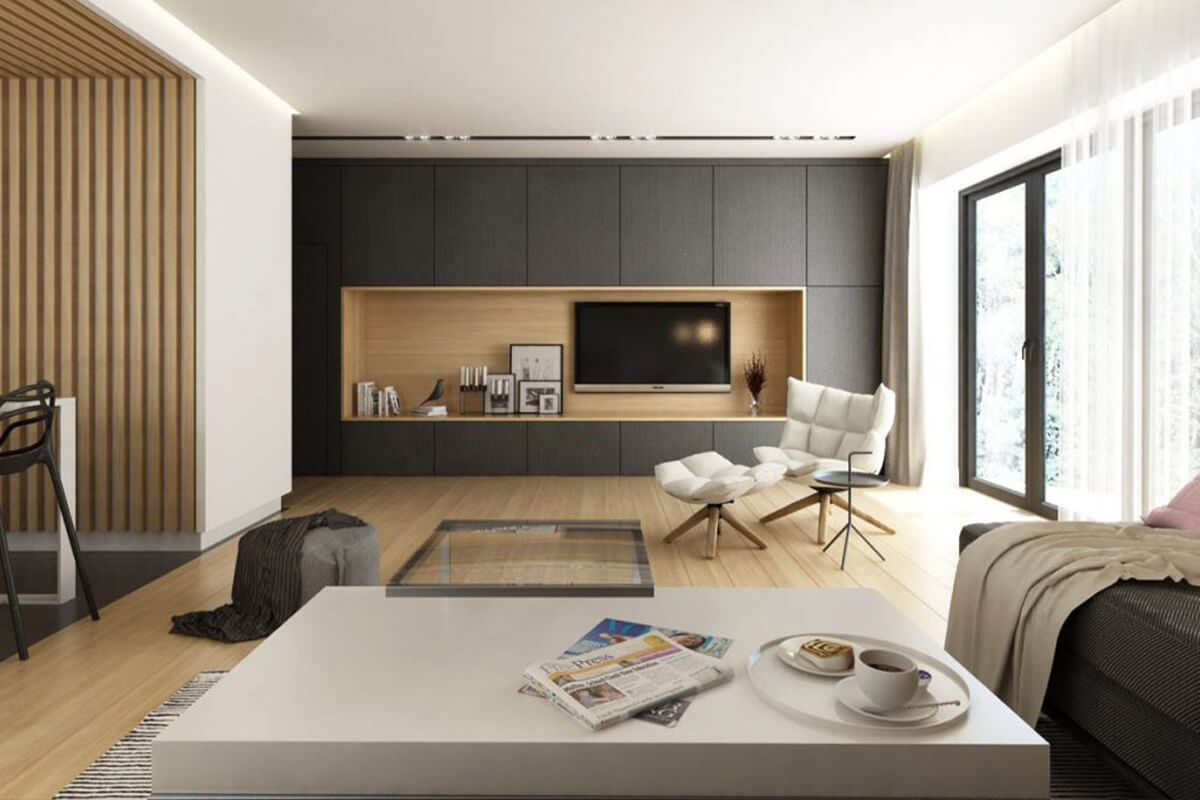
How to Balance Dark and Light Wood in a Living Room
1. Choose an anchor piece: Your floor, a large dining table, or a built-in feature usually sets the tone for the room. Everything else should support it, not compete with it.
2. Work in a 70/30 split: Interior designers commonly lean on a simple ratio of about 70% of the wood in a room in one dominant tone, with the remaining 30% as contrast. If your floors are light, keep most furniture light and use a dark coffee table, sideboard, or frames as the accent, not the other way around.
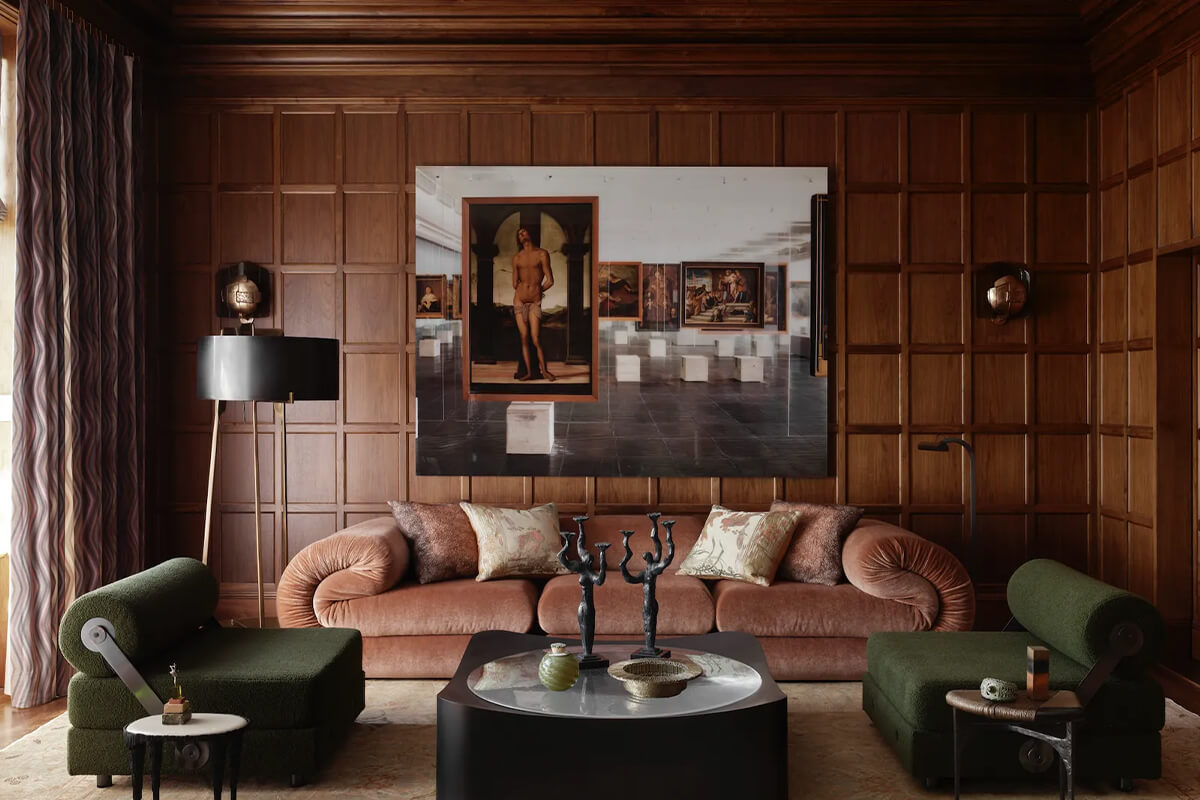
3. Limit yourself to two or three wood tones: More than three finishes in one space starts to look cluttered rather than curated. Pick your tones and repeat them. A dark wood coffee table paired with a dark wood picture frame across the room ties the palette together.
4. Use a rug or neutral surface as a buffer: When a dark furniture piece sits directly on wood flooring of a similar depth, the contrast can feel abrupt. A rug in a neutral tone gives both wood tones room to read clearly instead of blending into a muddy middle ground.
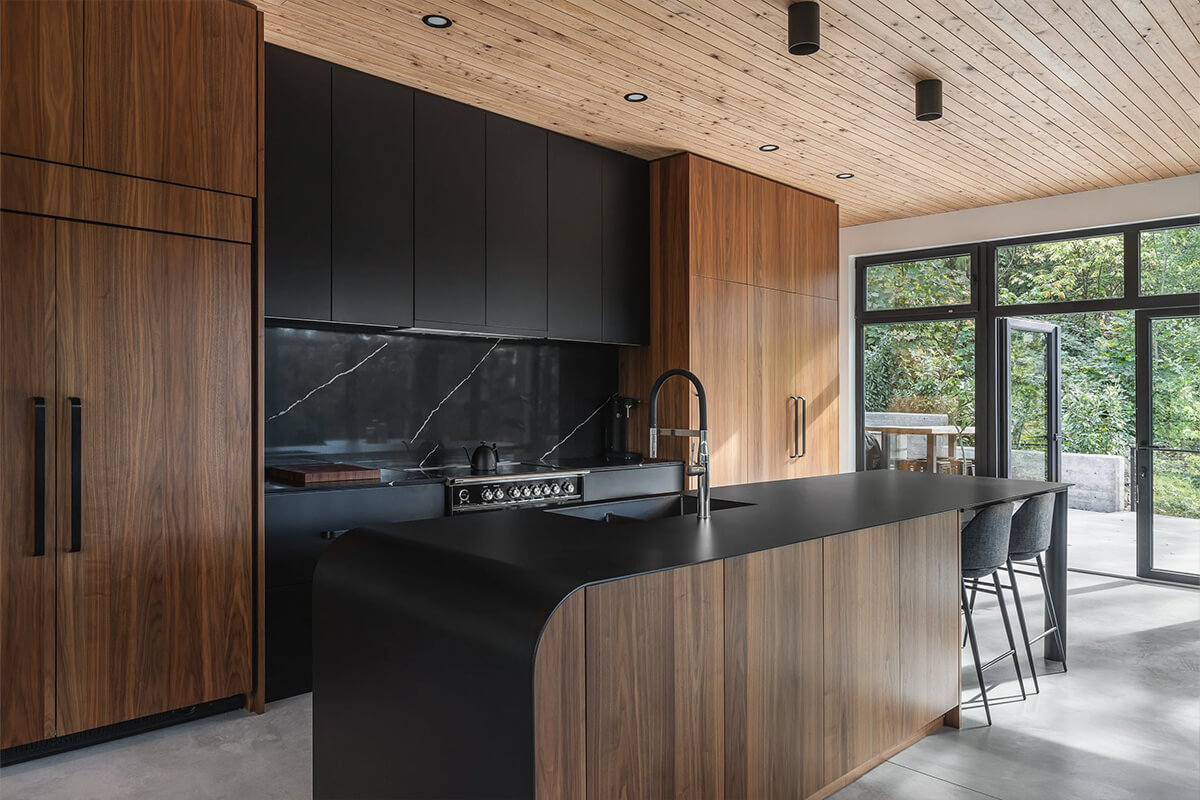
5. Bring in metal or painted accents: Brass, matte black, or chrome hardware and light fixtures give the eye a break between wood tones and add a layer that feels current rather than heavy.
Contact Our Team!
Whether your door needs a professional refinish or a full custom replacement, we’d love to take a look. Don’t hesitate in contacting us and one of our experts will be in touch shortly.
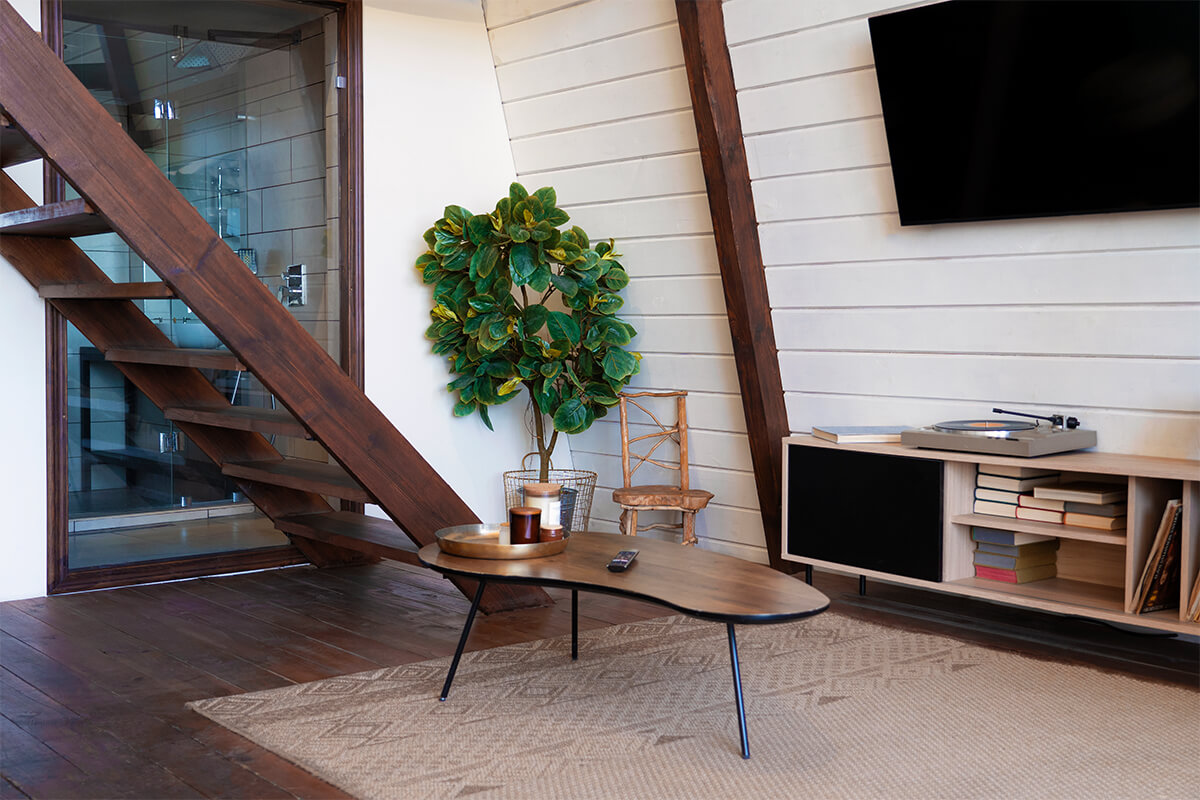
The Advantage of Real Wood and Custom Millwork
Mixing tones works best when the wood itself has real grain, weight, and craftsmanship behind it, something that’s harder to fake with laminate or veneer furniture. Solid wood and custom millwork offer a few advantages a mixed-wood room benefits from directly:
- Consistent, controllable undertone: Custom finishing lets you match an existing floor or door’s undertone exactly, rather than hoping a mass-produced piece happens to fit.
- Texture variety without buying new furniture: A single species can be finished matte, glossed, wire-brushed, or hand-distressed. Giving you the «different but related» look designers use to mix tones without adding a fourth wood type to the room.
- Longevity: Solid millwork holds its finish and structure for decades, so the anchor piece in your mixed-wood room isn’t the first thing that needs replacing.
- A cohesive thread through the whole house: Doors, trim, built-ins, and furniture can all be produced from the same shop with matched undertones, which is difficult to achieve buying pieces from multiple retailers.
2026 Wood-Pairing Trends Worth Knowing
- Whitewashed and gray oak paired with black walnut. A high-contrast combination that’s replacing the all-gray interiors of the past few years.
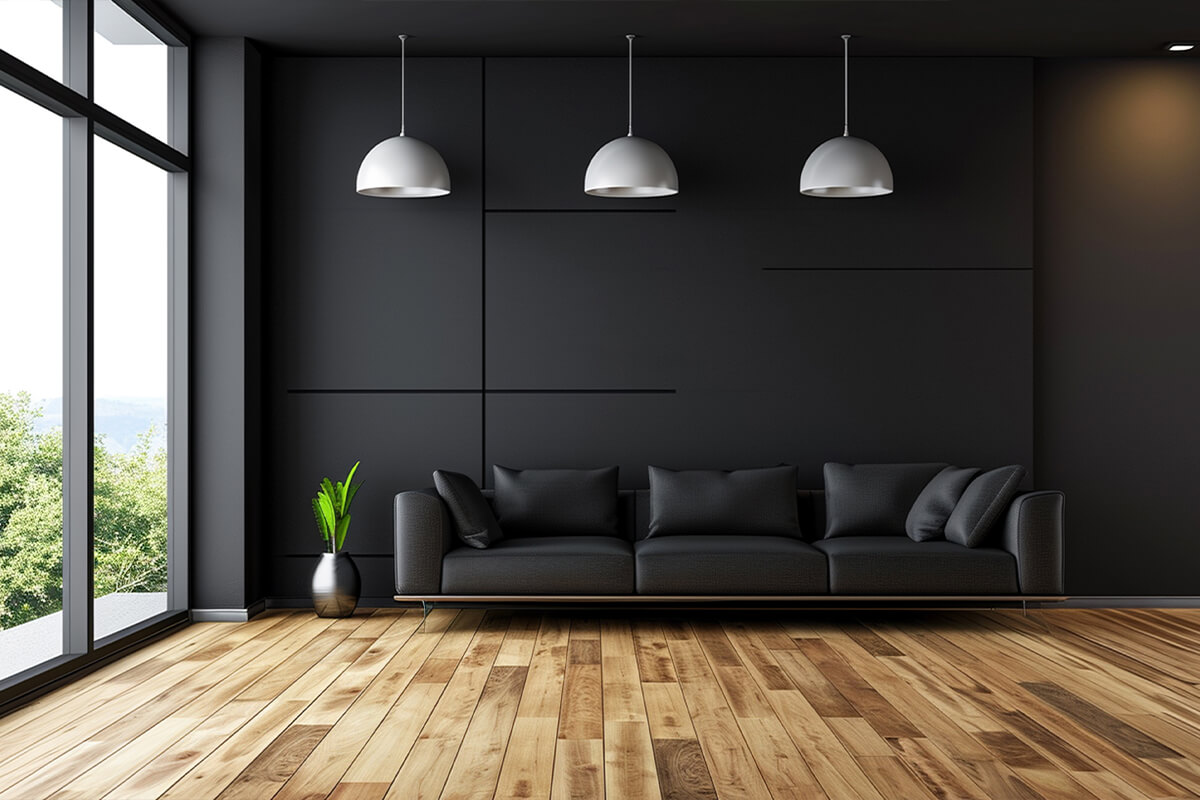
- Painted oak with the grain still visible. Black or deep green paint over oak keeps the natural texture while adding a bold, dark contrast point.
- Warm honey tones returning as the «light wood» partner, replacing the cooler, blonde Scandinavian woods that dominated the early 2020s.
- Reclaimed and live-edge wood as the dark anchor, paired with clean-lined, lighter cabinetry or millwork for contrast between rustic and refined.
Common Mistakes to Avoid When Pairing Woods
1. Skipping the sample stage: Wood reads differently under natural light, warm bulbs, and in different corners of a room. Always view a finish sample in the actual space before committing.
2. Mismatching undertones instead of shades: As covered above, this is the most common cause of a mixed-wood room feeling «off.»
3. Using too many wood tones at once: Two to three is the practical ceiling for most rooms.
4. Choosing tones that are almost the same. Near-matches read as mistakes. Clear contrast (true light next to true dark) reads as intentional.
Contact Our Team!
Whether your door needs a professional refinish or a full custom replacement, we’d love to take a look. Don’t hesitate in contacting us and one of our experts will be in touch shortly.
Mixing Wood Tones in a St. Louis Home
Older St. Louis homes from South City bungalows to Central West End brick two-flats, often already have original wood floors, trim, or doors with a lot of character and a well-established undertone. Rather than replacing that existing wood, the more effective (and often more affordable) approach is building new pieces around it like a custom door, built-in, or millwork detail finished to complement what’s already there instead of competing with it.
That’s where working with a local millwork shop has a real advantage over ordering furniture online. A team based in St. Louis can pull a sample against your existing floor or trim, match the undertone in person, and build a piece specifically finished to sit alongside what your home already has, rather than shipping a finish that may or may not match once it arrives.
Common Questions About Mixing Woods
Can you mix dark and light wood furniture in the same room?
Yes. It’s one of the most reliable ways to add depth to a space, as long as the tones share a compatible undertone and one tone stays dominant.
How many wood tones should be in one room?
Two to three. Beyond that, most rooms start to feel busy rather than layered.
Does mixing wood tones work in small rooms?
Yes, but lean lighter overall. Use light wood as the dominant tone and add dark wood in small doses such as a frame, a stool, a shelf, rather than large furniture pieces.
What's the easiest way to start mixing wood tones?
Pick one anchor piece like a floor, table, or door, and add a single contrasting piece near it. Expand gradually rather than changing every wood surface in the room at once.